

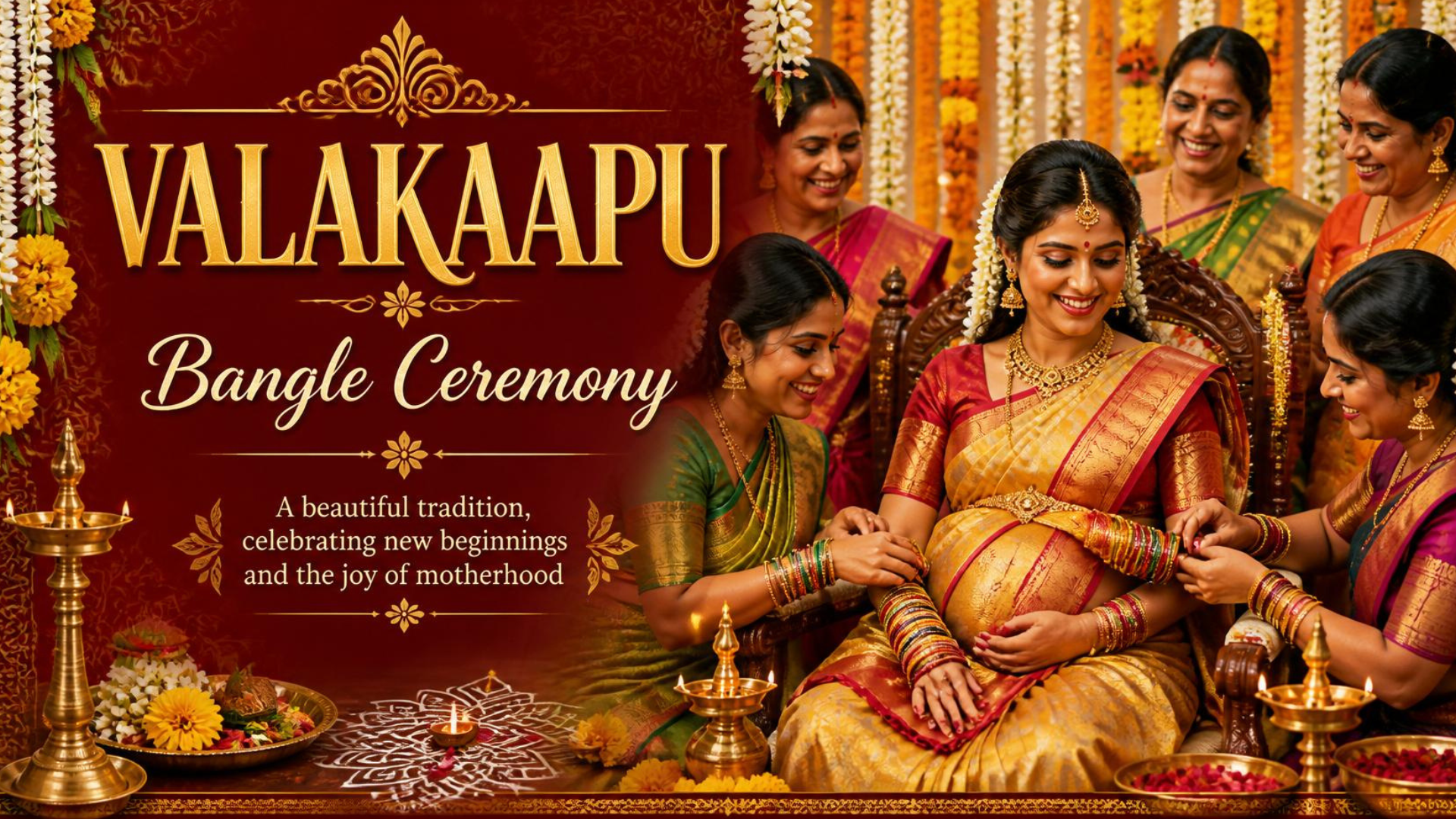
In Tamil culture, the Valaikappu (bangle ceremony) is celebrated for a beautiful blend of traditional, psychological, and scientific reasons. It is held during the 7th or 9th month of pregnancy to honor the expectant mother and welcome the upcoming baby.
Here is why it is celebrated:
1. Acoustic Stimulation for the Baby (The Sound of Bangles)
From a traditional standpoint—which aligns closely with modern prenatal science—a baby’s hearing senses develop significantly around the seventh month of pregnancy.
- The primary ritual involves filling the mother’s wrists with glass bangles.
- The constant, gentle tinkling and clinking sound of these bangles creates a soothing acoustic environment for the fetus.
- It is believed to stimulate the baby’s brain development, sharpen their hearing, and comfort them inside the womb.
2. Psychological Comfort and Stress Relief
Pregnancy can bring about anxiety and physical exhaustion, especially in the final trimester.
- Valaikappu shifts the focus entirely to comforting and pampering the mother-to-be.
- Surrounding her with chanting, music, laughter, and loved ones helps elevate her mood, reducing stress hormones which is directly beneficial for the baby’s well-being.
This is the heart of the function. An auspicious time (Muhurtham) is chosen for this ritual.
- The Order: The mother-to-be sits facing east. The eldest women in the family (mothers, grandmothers, mother-in-law) go first, followed by other married women (Sumangalis) and friends.
- The Bangles: Each woman gently slides glass bangles onto the pregnant woman’s wrists. Traditionally, an odd number of bangles (like 9, 11, or 21) are placed on each hand. Green and red glass bangles are the most common colors used. Neem or clay bangles are sometimes included for their traditional health benefits.
- The Blessings: As they place the bangles, the women apply Sandalwood paste (Chandanam) to her hands and arms for a cooling effect, and place a dot of Vermilion (Kumkumam) on her forehead. They bless her and the baby with wishes for a safe and healthy delivery.
Celebrating a Valaikappu is a beautiful, step-by-step process that blends ancient traditions with joyful family gatherings. While customs can vary slightly across different families, a traditional Tamil Bangle Ceremony generally follows this sequence:
1. The Pre-Ritual Prep (The Sringaram)
Before the guests arrive, the expectant mother is pampered and dressed in her finest attire.
- The Outfit: She typically wears a grand, bright-colored silk saree (often green, which symbolizes fertility and new life).
- The Hair and Jewelry: Her hair is beautifully braided and adorned with heavy flowers (Jadai). She wears traditional gold jewelry, but her wrists are left bare for the ceremony.
2. Setting the Stage (The Decor)
The venue is decorated to feel warm, traditional, and welcoming.
- Backdrops made of marigold flowers, mango leaves, and banana stems are highly traditional.
- A special seating area (often a decorated wooden bench or chair) is prepared at the center for the mother-to-be.
3. The Main Ritual: Adorning the Bangles
This is the heart of the function. An auspicious time (Muhurtham) is chosen for this ritual.
- The Order: The mother-to-be sits facing east. The eldest women in the family (mothers, grandmothers, mother-in-law) go first, followed by other married women (Sumangalis) and friends.
- The Bangles: Each woman gently slides glass bangles onto the pregnant woman’s wrists. Traditionally, an odd number of bangles (like 9, 11, or 21) are placed on each hand. Green and red glass bangles are the most common colors used. Neem or clay bangles are sometimes included for their traditional health benefits.
- The Blessings: As they place the bangles, the women apply Sandalwood paste (Chandanam) to her hands and arms for a cooling effect, and place a dot of Vermilion (Kumkumam) on her forehead. They bless her and the baby with wishes for a safe and healthy delivery.
4. Ward off Evil Eyes (Aarthi)
Once everyone has placed their bangles, the close family members perform an Aarthi (a plate with turmeric and lime water, lit with a small lamp) in front of the mother-to-be. This ritual is meant to ward off any negative energy or Drishti (evil eye) from her and the unborn child.
5. The Feast (Chithra Annam)
Food is a massive highlight of a Valaikappu. By tradition, the mother’s family prepares and serves an odd number of variety rices—usually 5 or 7 types. This is meant to satisfy the mother’s pregnancy cravings. The menu typically includes:
- Elumichai Sadam (Lemon Rice)
- Puliyodharai (Tamarind Rice)
- Thengai Sadam (Coconut Rice)
- Karuveppilai Sadam (Curry Leaf Rice)
- Sakkarai Pongal (Sweet Pongal)
- Thayir Sadam (Curd Rice)
- Appalam, poriyal, and a traditional sweet like Payasam.
6. Return Gifts (Thamboolam)
As guests prepare to leave, the host family thanks them by presenting a Thamboolam bag. This bag traditionally contains betel leaves and nuts, a coconut, a banana, a small packet of kumkum, and a few glass bangles for the guests to take home as a token of appreciation and good fortune.
Geschrieben von
PartyHelp Redaktion
Planen Sie eine Party?
Finden Sie die besten Services, Anbieter und Inspirationen für Ihr nächstes Event in der Schweiz.
Services entdecken